



How to Decorate an Indian-Style Bedroom Without Starting From Scratch
The bedroom you already have is closer than you think
Most people assume an Indian-style bedroom means a full renovation — new furniture, a feature wall, maybe a four-poster bed carved from teak. That idea is both expensive and unnecessary. The rooms that feel genuinely warm and culturally rich almost always get there through layering: the right objects on the right surfaces, chosen with some restraint.
If your bedroom already has a bed, a nightstand, and a dresser, you have everything you need to start. The goal isn't to replace what's there — it's to give the room a soul it currently lacks.
Start with the surfaces closest to eye level
When you walk into a room, your eyes don't sweep the floor first. They land at mid-height — the nightstand, the dresser top, a shelf above the headboard. These are the surfaces that set the mood of a space, and they're also the easiest to change without touching a single wall.
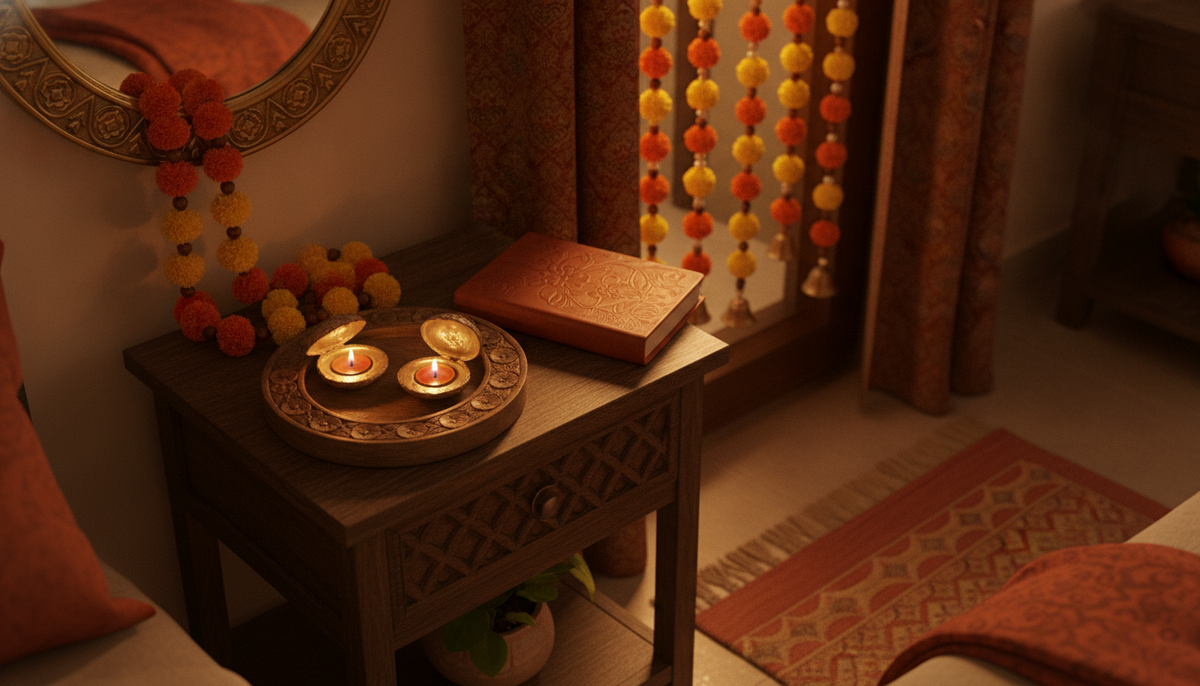
A nightstand is the most personal surface in any bedroom. It holds whatever you reach for last at night and first in the morning. Replacing a generic notebook with a hand-embossed leather journal — the kind where the cover has been worked by hand rather than printed — immediately changes the feel of that corner. It's a small shift that reads as intentional rather than decorated.
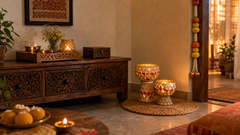
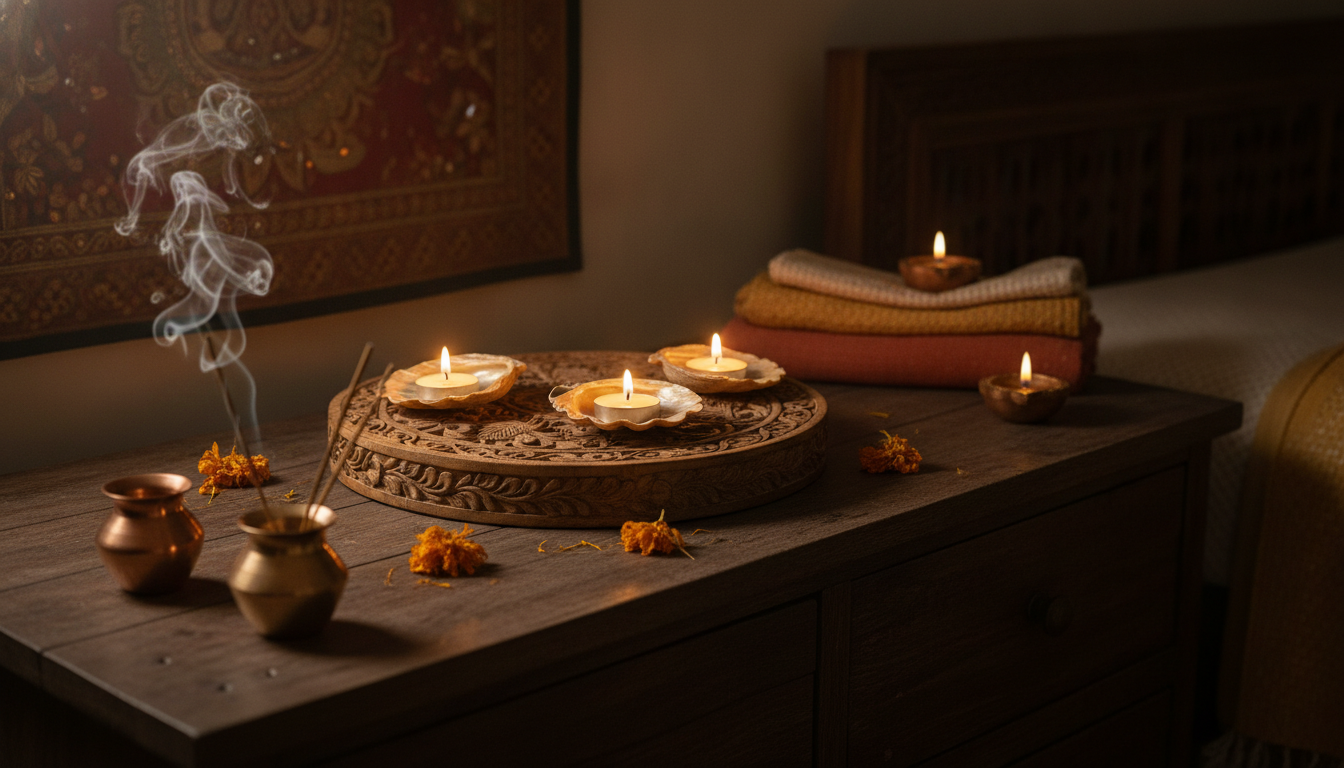
The dresser top is a slightly larger canvas. A carved wooden tray anchors the space and gives scattered items (rings, a watch, a hair clip) a place to live. A tray with hand-carved detailing does double duty: it's functional, and it introduces the kind of craftsmanship that tells a story without you having to explain it to anyone.
The doorway is part of the room too
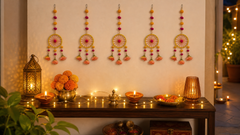
Indian homes have always treated doorways as transitions — places worth marking. A toran hung at the bedroom entrance is one of the simplest ways to signal that the space inside is considered and intentional. Marigold and pearl torans, like the ones StoreIndya carries, bring in the warm orange and yellow tones that pair naturally with wooden furniture and warm-toned walls without clashing with cooler palettes.
This is also a zero-commitment change. No nails, no paint, no rearranging. A toran hangs in minutes and transforms the entrance to the room in a way that feels both festive and everyday — not reserved for Diwali, but not out of place during it either.
Light is where Indian décor really earns its place
Overhead lighting flattens a bedroom. The rooms that feel warm and layered almost always have a secondary light source — something lower, softer, and closer to the ground or surface level. Tea light candle holders do this beautifully.
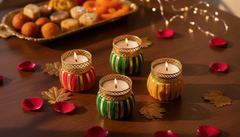
Shell tea light holders in particular catch and scatter light in a way that glass and metal don't. The natural variation in shell means no two holders are identical, and the warm glow they cast on a dresser or windowsill changes the entire character of a room after dark. You don't need many — a small cluster of three or four on a tray is enough to make an evening in your bedroom feel genuinely different from the rest of the house.
The practical note: always use them on a stable, heat-safe surface, and keep them away from fabric. But you knew that.
The mistake most people make: too much, too fast
A bedroom is not a living room. It's a smaller, more personal space, and it tips into clutter faster than any other room in the house. The most common mistake when decorating with Indian-style accents is treating every surface as an opportunity — filling the nightstand, the dresser, the windowsill, the floor corner, and the wall all at once.
The result looks busy, not rich. Indian craft objects are detailed by nature — carved, embossed, woven, painted. They need breathing room to be seen properly. A good rule of thumb: address two or three surfaces, not five. Leave at least one surface in the room completely clear. The contrast is what makes the decorated surfaces feel intentional.
Pick a focal point. For most bedrooms, that's the nightstand or the dresser. Build there first, live with it for a week, and then decide if you want to add anything else. You'll almost always find you don't need to.
Colour without commitment
Indian craft tends to work in warm, saturated tones — marigold orange, deep burgundy, forest green, turmeric yellow. If your bedroom is currently neutral (white walls, grey bedding, natural wood), these colours will add warmth without fighting the existing palette. If your room already has a dominant colour, look for accents in a complementary tone rather than trying to match exactly.
Flower strings and garlands are a low-risk way to introduce colour. Draped over a mirror frame, along a shelf edge, or looped around a bedpost, they add softness and movement without taking up surface space. They're also easy to swap out seasonally — brighter for Diwali and Holi, more muted for everyday.
Gifting logic applies here too
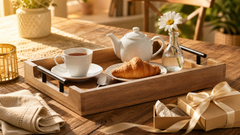
If you're doing this for your own bedroom, you're essentially curating a space that reflects your taste. But if you're helping someone else — setting up a guest room, gifting a newly married couple, or putting together a housewarming present — the same layering logic applies. A carved tray, a leather journal, and a set of tea light holders together make a bedroom gift that's both cohesive and genuinely useful. For anyone navigating what to gift a couple for Raksha Bandhan, a set of bedroom accents like these is a far more considered choice than another box of sweets.
Where to begin if you're starting today
Don't overthink the order. Pick the surface you look at most in your bedroom — probably the nightstand — and start there. One carved tray or embossed journal is enough for a first step. Add a tea light holder or two once you see how that feels. Hang the toran last, when you're ready for the room to announce itself.
The bedroom you have now is already the right starting point. You're just giving it the warmth it was missing.
Browse handcrafted bedroom accents at StoreIndya — from carved wooden trays and shell tea light holders to hand-embossed leather journals that earn a permanent spot on your nightstand.
Frequently Asked Questions
Do I need to redecorate the whole bedroom to get an Indian-style look?
Not at all. The most effective approach is to layer a few well-chosen handcrafted accents onto surfaces you already have — a nightstand, a dresser top, a doorway. Two or three thoughtful objects do more work than a full room overhaul, and they're far easier to adjust over time.
What Indian décor items work best in a small bedroom?
Stick to surface-level accents that don't take up floor space: carved wooden trays, tea light candle holders, embossed leather journals, and door torans. These introduce warmth and craftsmanship without making a compact room feel crowded. The key is restraint — decorate two or three surfaces, not every one.
Can I use Indian-style décor in a bedroom that already has a modern or neutral aesthetic?
Yes, and it often works better than you'd expect. Neutral walls and bedding give warm-toned, handcrafted objects room to breathe. Marigold oranges, deep greens, and natural wood tones sit comfortably against white, grey, and beige — they add depth rather than clashing. The trick is keeping the number of accents low so each one stands out.
Are these kinds of accents suitable as bedroom gifts for couples or housewarming presents?
They're well-suited for both. A carved tray, a set of tea light holders, and a hand-embossed journal together make a cohesive, practical gift that works for any bedroom — not just one decorated in an Indian style. They're also easy to wrap and present as a curated set rather than individual items.
- artisan home
- bedroom decorating
- festive décor
- handmade home accents
- Indian décor
- Indian style interiors