


Modern Indian Living Room Decor: 6 Object Types That Earn Their Place (and 2 That Don't)
Most living rooms don't have a problem with taste. They have a problem with editing. You bring home a beautiful marigold garland, a carved wooden tray, a pair of brass diyas, and suddenly the room feels like a festival stall rather than a home. The objects are lovely individually. Together, they're competing.
This guide is for anyone who loves Indian craft traditions but is working with a modern living room — neutral walls, mixed furniture, limited shelf space, maybe a sofa that came from IKEA. The question isn't whether Indian décor belongs there. It does. The question is which types of objects earn their place and which ones quietly undermine everything else.
Here's an honest category-by-category verdict.
The 6 That Work
1. Door Hangings and Torans
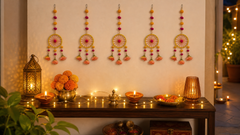
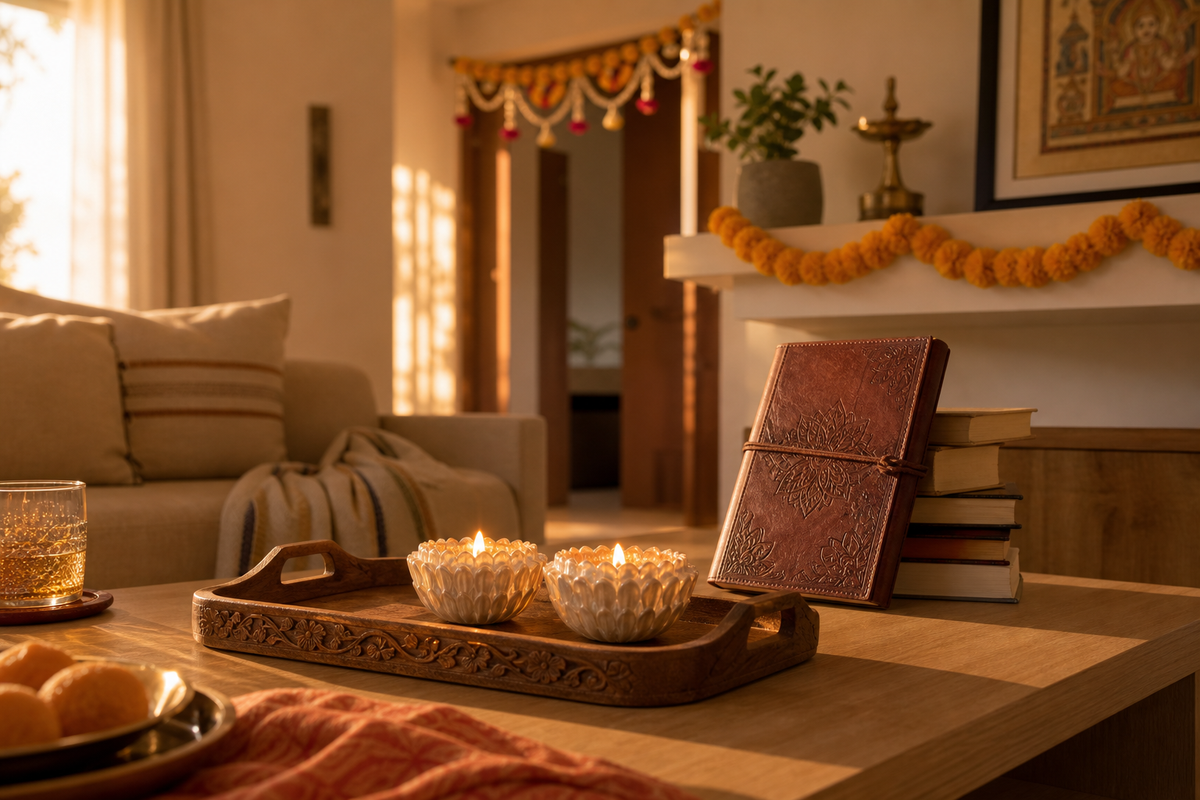
A toran — the traditional decorative hanging placed above a doorway — is one of the smartest things you can bring into a modern home because it occupies vertical space that would otherwise sit empty. Your walls are already there. The doorframe is already there. A well-made toran with marigold motifs or pearl detailing adds warmth and cultural weight without consuming a single surface.
The verdict: it works when the doorway is visible from the living area and the toran has a clean silhouette. It doesn't work when it's crammed above a door that leads to a utility room nobody sees. Placement is everything — treat it as a focal point, not an afterthought.
2. Wooden Serving Trays as Décor Objects
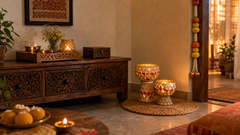
A hand-carved wooden tray is quietly one of the most versatile objects in Indian craft. On a coffee table, it acts as a corral — it groups smaller objects (a candle, a small bowl, a coaster) into a deliberate arrangement rather than a scatter. That's exactly what a modern living room needs: containment, not more stuff.
The verdict: a tray works when it's doing organizational work, not just sitting there looking decorative. If it's holding three things with breathing room between them, it's earning its place. If it's buried under a pile of remotes and receipts, it's just furniture.
3. Tea Light Candle Holders
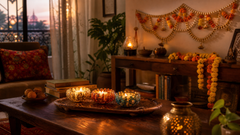
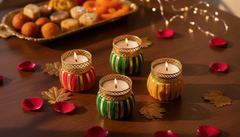
Candlelight changes a room in a way that no other single element does, and shell or artisan-crafted tea light holders give you that effect with minimal visual footprint. A set of four across a windowsill or sideboard creates atmosphere without clutter — they're small, they're quiet, and when lit, they do the heavy lifting.
The verdict: they work in almost any modern living room because they're compact and the light they cast is warm and forgiving. The only misstep is buying too many and lining them up in a row like a birthday cake. Group them in odd numbers, vary the height slightly, and leave gaps.
4. Artificial Flower Garlands and Strings
Marigold garlands have a specific problem in modern interiors: they're associated so strongly with temporary festival decoration that people treat them as temporary. That's a mistake. A well-made artificial flower string, draped along a bookshelf edge or looped around a mirror frame, reads as a design choice rather than a leftover from Diwali — provided it's made with enough craft to hold up to scrutiny.
The verdict: garlands work when they're used architecturally — following the line of a shelf, a window, a headboard — rather than just hung in a loop from two nails. They don't work when they're drooping. Tension and placement matter more than the garland itself.
5. Decorative Boxes and Carved Wooden Accents
A decorative box is one of the few objects that can sit on a shelf and justify its presence purely by looking good, because it implies storage even when it's mostly decorative. In a modern living room where everything needs to pull double duty, that implied function is valuable. Carved wooden boxes with traditional motifs add texture and depth to a shelf without the visual noise of open objects.
The verdict: one or two on a bookshelf, staggered in size, works well. A collection of six becomes a hobby display. Keep it to what you can count on one hand.
6. Journals and Leather-Bound Stationery as Shelf Objects
This one surprises people. A hand-embossed leather journal, standing upright on a shelf between books, reads as an object of character — not a craft fair purchase. It adds texture (leather against paper spines), color (deep jewel tones against neutrals), and a sense of curated personality that mass-produced books can't replicate.
The verdict: it works when the journal is displayed, not hidden. Prop it up, let the embossing face out, and treat it as a design object that also happens to be usable. It doesn't work stuffed into a drawer.
The 2 That Don't (Usually)
1. Large Brass Figurines and Idol Collections
This is a sensitive one, but it needs saying. A single, well-chosen brass or metal figurine can anchor a shelf beautifully. A collection of eight, arranged by size, turns a living room into a display case. The issue isn't the objects — it's the density. Modern living rooms work on restraint, and collections of any kind tend to fight that principle hard.
If you have figurines that matter to you, choose the one or two that are most visually striking and give them space. The rest deserve a dedicated altar or display shelf in a different room where they can be grouped with intention rather than squeezed onto a coffee table.
2. Curtain Tiebacks with Heavy Ornamental Tassels
Ornate curtain tiebacks — the kind with heavy tassels, multiple colors, and elaborate knotwork — were designed for rooms with a lot going on: rich fabrics, layered textiles, elaborate window treatments. In a modern living room with simple linen curtains or plain roller blinds, they create a mismatch that reads as unfinished rather than eclectic.
The verdict: if your curtains are already detailed, a traditional tieback can complement them. If your curtains are simple — which most modern ones are — a simpler tieback or none at all will serve the room better. This is one category where restraint beats enthusiasm.
The Principle Behind the List
Every object that earns its place in a modern living room does one of three things: it occupies space that would otherwise be empty (like a toran above a doorframe), it organizes other objects (like a tray on a coffee table), or it adds texture and warmth without adding visual noise (like a tea light holder or a leather journal). Objects that fail usually do so because they're competing for the same surface space as everything else — or because they belong to a collection mindset rather than a curation mindset.
Indian craft traditions have a centuries-long history of objects made for specific places and purposes — a toran for a threshold, a diya for a puja space, a tray for serving. Respecting that original logic, even loosely, tends to produce rooms that feel coherent rather than crowded.
If you're gifting for a home — perhaps for a couple setting up a new space — the same principles apply. A practical guide to bhaiya-bhabhi gift sets can help you choose pieces that work together rather than compete.
Shop the pieces that made this list — all handcrafted and ready to ship — at StoreIndya.
Frequently Asked Questions
How do I mix Indian décor with modern or Scandinavian-style furniture without it looking mismatched?
The key is to anchor the Indian pieces to specific zones rather than scattering them across the room. A carved wooden tray on a minimalist coffee table, or a marigold garland along a plain white shelf, creates contrast that reads as intentional. The furniture style matters less than the density — one or two Indian craft objects in a modern room feel curated; eight feel cluttered.
Can I use festival décor like torans and garlands year-round, or do they only work during Diwali and weddings?
Absolutely year-round. Artificial marigold torans and flower strings are made to last and look just as good in January as they do during Diwali. The trick is placement — a toran above a main doorway or a garland following the line of a bookshelf reads as a permanent design choice, not a leftover decoration. The festival association fades when the object is integrated thoughtfully into the room.
What's the safest starting point if I'm new to Indian home décor and don't want to overdo it?
Start with one object per surface and one surface at a time. A set of tea light holders on a windowsill, or a wooden tray organizing your coffee table, gives you a feel for how Indian craft sits in your space before you commit to more. It's much easier to add a second piece than to edit back from a room that's already busy.
Are handmade Indian décor items durable enough for everyday use, or are they purely decorative?
It depends on the category. Hand-carved wooden trays are genuinely functional and built for use — they're not fragile display pieces. Tea light holders, leather journals, and decorative boxes are similarly robust. Flower garlands and torans are designed for display rather than handling, but a well-made artificial version holds up far better over time than a fresh one. The craftsmanship behind artisan-made pieces generally means they're made to last, not to be replaced each season.
- festive decor
- handmade decor
- home styling tips
- Indian crafts
- Indian home decor
- living room styling