


Vastu-Friendly Home Décor: What It Actually Means for How You Decorate
The gap between Vastu advice and real decorating decisions
Most people who look up Vastu Shastra home décor tips end up with one of two things: a dense chart of directions and planetary zones, or a list of generic rules like "keep your home clutter-free" that could have come from any lifestyle magazine. Neither is particularly useful when you're standing in front of your front door trying to decide what to hang there.
Vastu Shastra is an ancient Indian system of spatial design — its name roughly translates to "science of dwelling" — and it has shaped the layout and decoration of Indian homes for centuries. But stripped of the jargon, its core logic is actually quite practical: it's about how the energy, light, and flow of a space affect the people living in it. That framing makes it a lot easier to apply.
This post focuses on three areas where Vastu principles have the clearest, most actionable implications for how you decorate: the entrance, the living room, and the puja corner.
The entrance: the most Vastu-sensitive spot in your home
Vastu places enormous emphasis on the main entrance, and for good reason — it's where the outside world meets your home. The entrance is considered the primary point through which energy (or prana) enters, which is why Vastu guidelines for this area are more specific than anywhere else.
A few things Vastu consistently recommends for the entrance:
- Keep it well-lit and welcoming. A dark or cluttered entrance is considered inauspicious because it blocks the flow of positive energy. Practically, this means good lighting and a clear, unobstructed threshold.
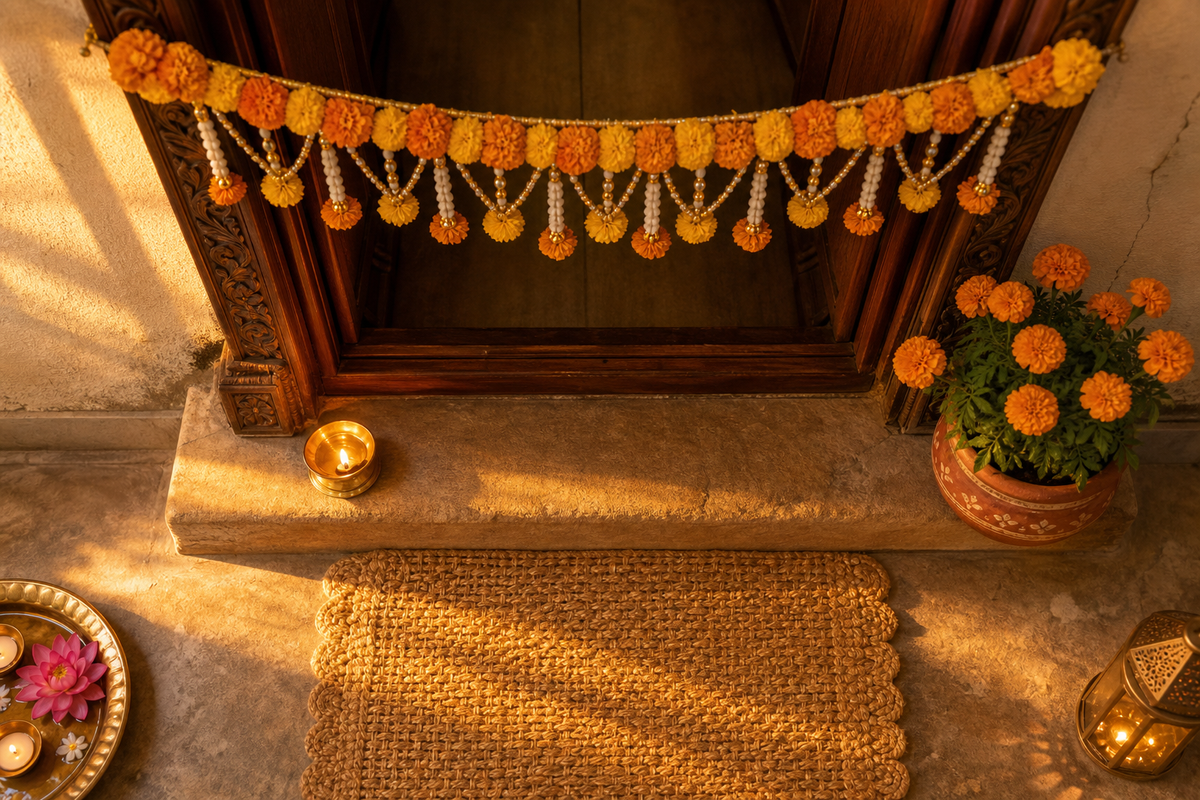
- Decorate the door frame, not just the door. Hanging something auspicious at the entrance — a toran, a garland, a string of marigolds — is one of the oldest and most widespread practices in Indian home décor. It signals welcome and marks the home as a living, cared-for space.
- Use natural materials and auspicious motifs. Vastu favors organic materials (wood, flowers, shells, clay) over synthetic ones at the entrance, and traditional motifs like flowers, paisleys, and geometric patterns are considered harmonious.
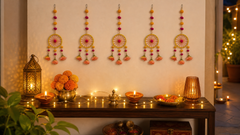
The marigold toran is probably the most direct expression of all three of these principles at once. A decorative door hanging made with artificial marigolds and pearl accents — like the kind Indian craft artisans have been producing for generations — ticks every Vastu box: it's bright, it frames the door, it uses traditional motifs, and it makes the entrance feel intentional rather than bare.
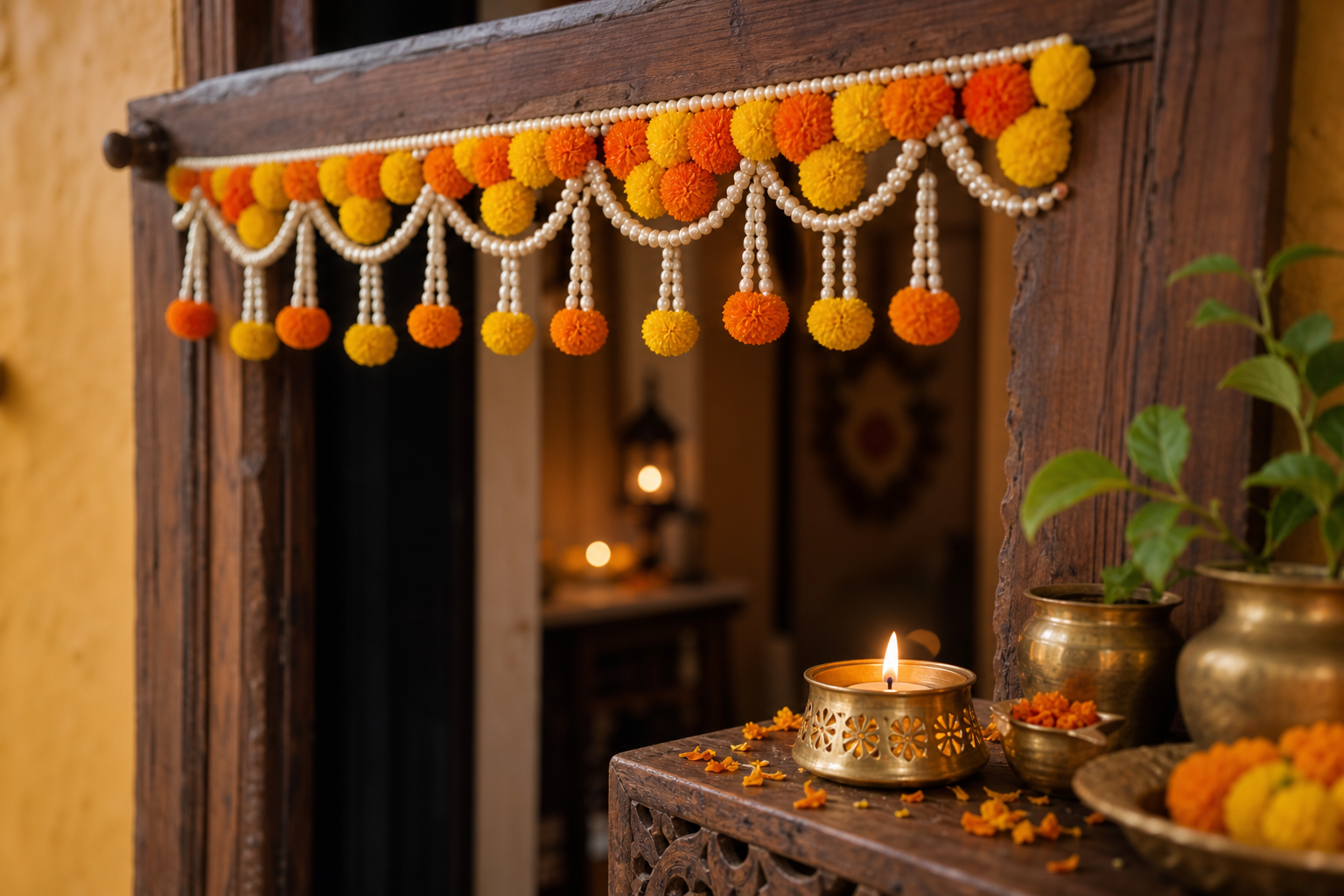
Flower strings hung at the entrance or along a doorway serve a similar function. Five-foot garlands in marigold yellow create that same sense of a threshold being marked and celebrated — which, at its heart, is exactly what Vastu is asking you to do.
The living room: balance over maximalism
Vastu's guidance for the living room is less about specific objects and more about spatial logic. The north and east walls are generally considered favorable for décor and seating arrangements, while heavy furniture is advised against the south and west walls. But beyond the directional specifics, Vastu's underlying principle for the living room is balance — between light and shadow, between decoration and open space, between the functional and the beautiful.
This is where a lot of Indian homes actually struggle. The instinct during festivals or celebrations is to add more — more lights, more color, more objects — and Vastu would say that's fine, as long as the room still breathes. Clutter, in Vastu's view, is the enemy of good energy, not decoration itself.
What this means practically:
- Choose décor pieces that do double duty — a carved wooden tray on a coffee table is both functional and beautiful, and it doesn't add visual noise the way purely ornamental objects can.
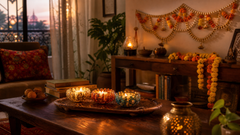
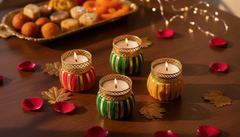
- Use candles and tea light holders thoughtfully. Vastu associates the fire element with the south-east corner of a room, making that a natural spot for diyas or tea light holders. Shell tea light holders, for instance, bring both the fire element and a natural organic material into the space — two things Vastu responds well to.
- Avoid broken, wilting, or artificial-looking décor. Vastu is fairly consistent on this: anything that looks like it's decaying or synthetic-without-artistry is considered energetically flat.
The puja corner: the one area where Vastu is most specific
If there's one space in an Indian home where Vastu guidelines are both widely followed and genuinely well-reasoned, it's the puja corner or mandir. The north-east corner of the home is traditionally considered the most auspicious zone — associated with light, clarity, and spiritual energy — and Vastu consistently recommends placing the puja space there.
Beyond placement, Vastu suggests keeping the puja area:
- Clean and uncluttered. The puja corner should feel set apart from the rest of the home's activity — not buried in storage or surrounded by everyday objects.
- Well-lit, ideally with a diya or candle. The flame is central to most Hindu puja rituals, and Vastu aligns with this — the fire element in the puja space is considered both purifying and energizing.
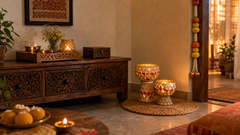
- Decorated with intention. Flowers, garlands, and auspicious motifs around the puja area are encouraged. This is where a small marigold garland or a decorative toran above the mandir shelf makes a real difference — it marks the space as sacred without requiring a full renovation.
The objects Indian craft tradition has always produced for the puja space — diyas, tea light holders in natural materials, small garlands, flower strings — exist precisely because this need has been understood for a long time. Vastu didn't invent these objects; it articulates why they belong where they've always been placed.
A note on what Vastu isn't
It's worth saying plainly: Vastu Shastra is a traditional design philosophy, not a guaranteed system with measurable outcomes. You don't need to tear down walls or replace every piece of furniture to apply its principles. The most accessible version of Vastu-conscious decorating is simply this — pay attention to your entrance, keep your spaces uncluttered, use natural materials, and mark the places that matter (the threshold, the puja corner, the dining table) with something intentional and beautiful.
That's not mysticism. That's just good decorating, with a few thousand years of Indian craft tradition behind it.
If you're shopping for Raksha Bandhan and wondering how home décor fits into that occasion, the same principles apply — a thoughtfully chosen toran or garland set makes a gift that's both beautiful and genuinely meaningful. Our guide to Bhaiya-Bhabhi gift sets for Raksha Bandhan covers how to put together something that lands well for a couple's home.
Explore StoreIndya's entrance and puja décor — handcrafted torans, marigold garlands, tea light holders, and more, all made to fit naturally into a Vastu-conscious home.
Frequently Asked Questions
Which direction should the main entrance face for Vastu?
Vastu Shastra traditionally considers north, north-east, and east-facing entrances to be the most auspicious, as these directions are associated with sunlight, prosperity, and positive energy. That said, Vastu also offers guidance for homes with south or west-facing entrances — the direction alone doesn't determine whether a home can be Vastu-friendly.
Can artificial flowers like marigold torans be used in Vastu décor?
Vastu traditionally favors fresh flowers, but the practical reality is that fresh garlands at the entrance need to be replaced frequently. High-quality artificial marigold torans made with care and natural-looking materials are widely used in Indian homes as a lasting alternative — the intent and the visual warmth they bring to the entrance are what matter most in everyday decorating.
Where exactly should I place tea light holders or diyas in the living room?
Vastu associates the fire element with the south-east direction, so the south-east corner of your living room is generally considered the right spot for candles, diyas, or tea light holders. During festivals like Diwali, placing them along windowsills and near the entrance is also traditional and considered auspicious.
Does Vastu apply to rented homes or apartments, or only to owned property?
Vastu principles apply to any living space, regardless of ownership. Since most of the actionable Vastu advice for renters focuses on décor and arrangement rather than structural changes — things like what you hang at the entrance, how you position your puja corner, and how you use light and natural materials — it's very practical to apply even in a rented apartment.
- Entrance Décor
- Festive Décor
- Home Décor
- Indian Décor
- Puja Corner
- Vastu Shastra