


Vastu Tips for Positive Energy at Home: Which Objects to Place Where (and Why It Actually Matters)
The Mistake Most People Make with Vastu
You've probably read the basics. North-east for water, south-west for heavy furniture, keep the entrance clutter-free. Good advice — but it stops exactly where it gets interesting. Because Vastu Shastra isn't really a list of dos and don'ts. It's a system built on how materials, weight, light, and direction interact to shape the energy of a space. Once you understand that logic, you stop guessing and start making deliberate choices about every object in your home.
This guide works through that logic room by room, and maps specific categories of handcrafted décor — carved wooden pieces, tea light holders, hanging door décor, flower garlands — to the directions and spaces where they genuinely belong.
Why Material and Weight Matter More Than Most People Realise
Vastu Shastra, one of the oldest built-environment sciences in Indian tradition, treats a home as a living system of five elements: earth, water, fire, air, and space. Every object you bring in carries one or more of these elemental qualities — and where you place it either supports or disrupts the balance of that zone.
Wood, for instance, carries earth and air energy: it's grounding but also warm and living. Heavy carved pieces anchor a space. Lighter, open-weave or shell-based objects let energy move. Flame — even a small tea light — represents the fire element and belongs in zones that Vastu associates with transformation and vitality. Fabric and natural flowers, fresh or artisan-crafted, carry air and space qualities and work best at entry points where energy first enters a home.
This is why the what matters as much as the where. A heavy stone object in the north-east (a water zone) creates resistance. A light, shell-based candle holder in the south-east (the fire zone) amplifies the right energy. The object and the direction have to speak the same elemental language.
The Entrance: Where Energy Enters First
Your front door is the mouth of your home in Vastu terms — the primary channel through which energy, opportunity, and guests arrive. This makes it the single most important spot to get right, and also the easiest to neglect.
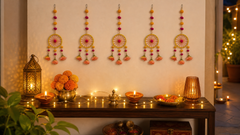
Door hangings and torans are among the most traditional Vastu-aligned entrance pieces in Indian homes, and not just for aesthetics. A toran made with marigold motifs or pearl accents at the entrance signals welcome and is believed to attract auspicious energy inward. The movement of a hanging garland in a light breeze also keeps air energy circulating rather than stagnant at the threshold.
Practically: hang your toran at the top of the main door frame. Keep the entrance well-lit and free of clutter on both sides. A decorative artificial marigold and pearl toran — the kind that holds its colour through every season — works particularly well here because it maintains the visual warmth of a fresh garland without wilting between festival seasons.
The Living Room: Grounding the Space with Wood and Warmth
The living room is where social energy concentrates, which in Vastu terms means it needs both stability and warmth. The south and west walls are associated with earth energy — exactly where heavier, grounding objects belong.
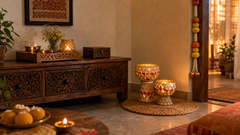
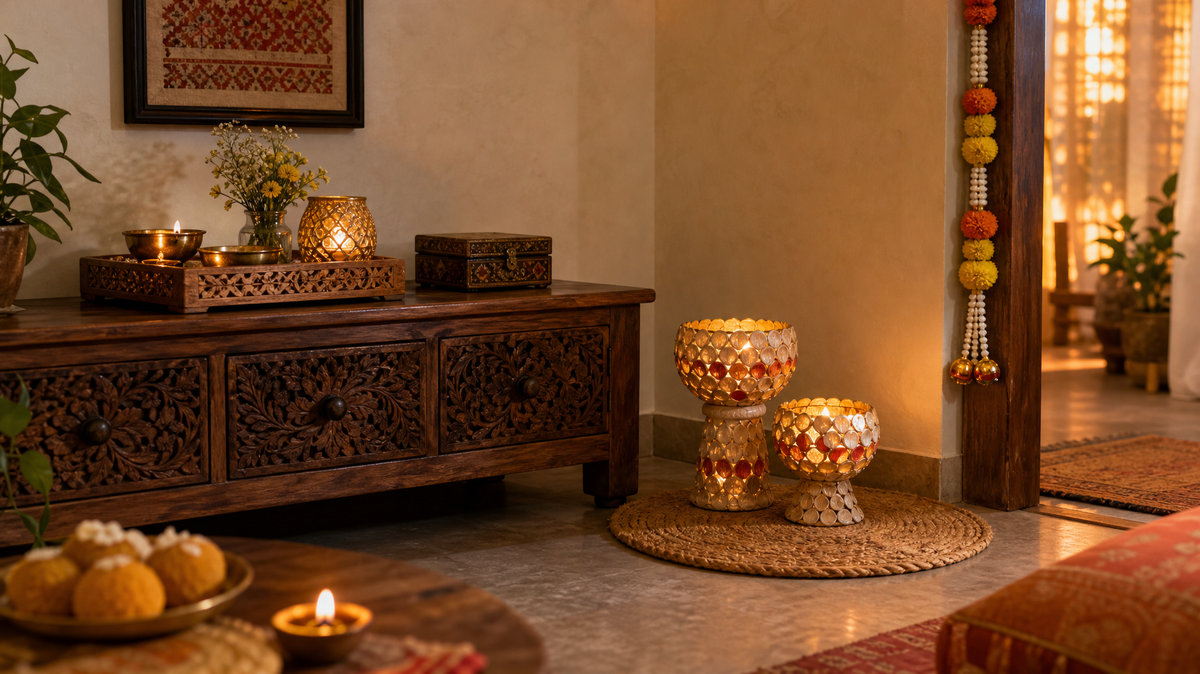
Carved wooden trays, decorative boxes, and serveware placed on a sideboard or low shelf along the south or west wall anchor the room without making it feel heavy. The key is that the wood should feel substantial — hand-carved pieces with texture and depth carry more elemental weight than smooth, mass-produced alternatives.
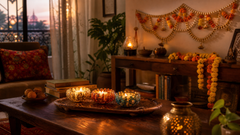
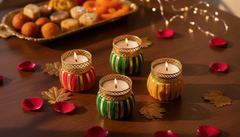
For warmth, the south-east corner of the living room is the fire zone. This is the natural home for a cluster of tea light candle holders. Shell-based holders are particularly well-suited here: shell is a natural material with its own textural energy, and the light refracting through it creates the kind of soft, diffused glow that feels alive rather than harsh. A set of assorted shell tea light holders grouped at different heights in the south-east corner does exactly what Vastu asks of that zone — it activates without overwhelming.
The Pooja Room or Prayer Corner: Light, Symmetry, and Natural Materials
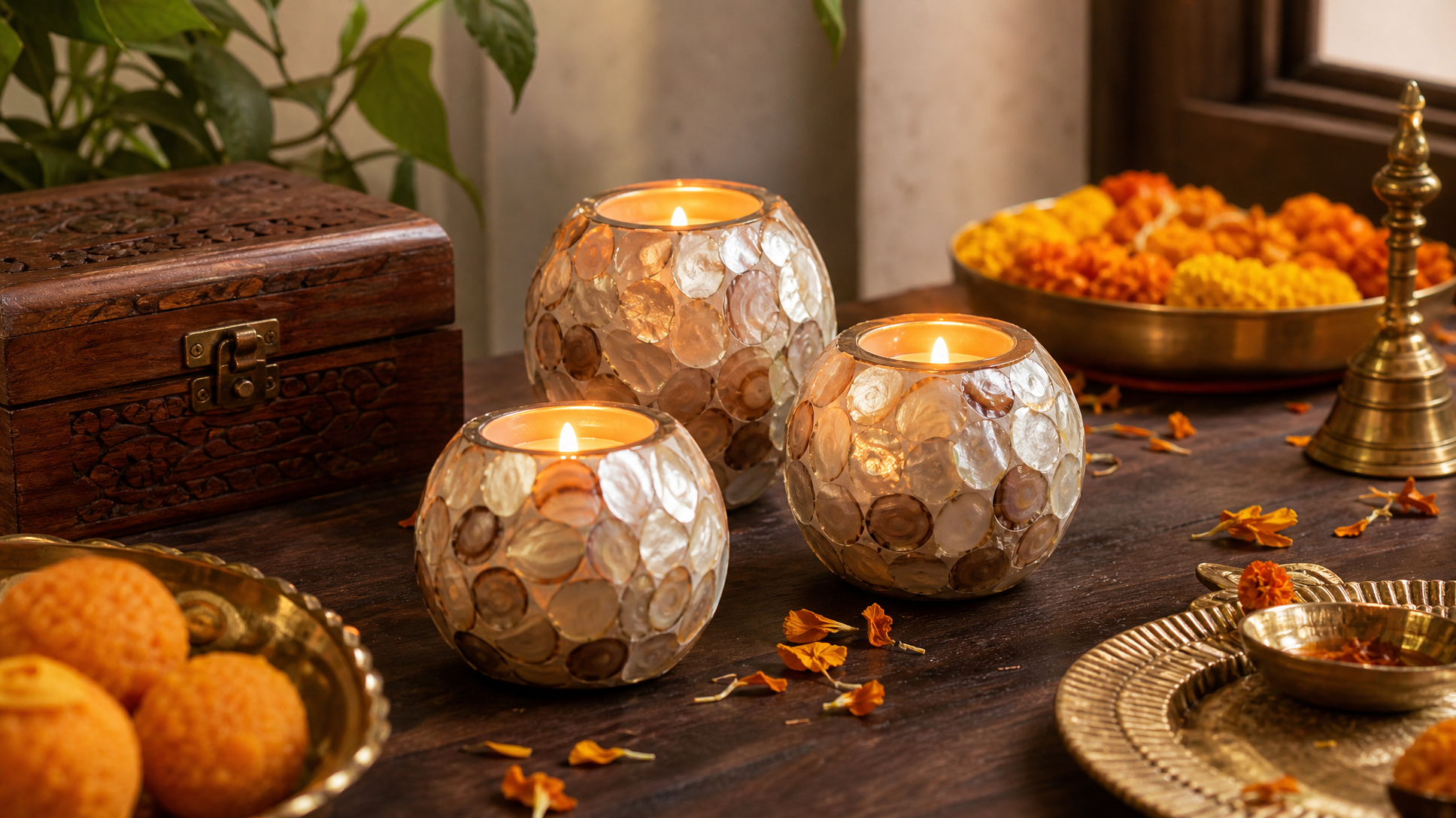
If your home has a dedicated pooja room or a prayer corner, Vastu places it ideally in the north-east — the zone associated with water, clarity, and spiritual receptivity. This is the one area of the home where the principles are most widely observed, and for good reason: the north-east gets morning light, which is gentle and energising rather than harsh.
In this space, keep objects light and symmetrical. Heavy carved pieces don't belong here — save those for the south and west. What works: small tea light holders in natural materials, fresh or artisan flower strings arranged around the deity, and open, uncluttered surfaces. Marigold garland strings draped around the altar or prayer shelf bring colour and the flower's traditional association with devotion and purity in Indian ritual culture.
One practical note: avoid synthetic materials in the pooja corner wherever possible. Natural materials — shell, wood, cotton, dried or artisan-crafted flowers — align with the elemental sensitivity this zone calls for.
The Dining Area: Where Abundance Should Feel Easy
Vastu associates the west with the water element in its nourishing, abundance-related sense — which makes the west wall of your dining area a good anchor for décor that signals plenty without clutter. A carved wooden serving tray displayed on a sideboard or dresser along the west wall does double duty: it's functional when you need it, and it adds the warm, grounding energy of natural wood to the space when it's not in use.
Keep the dining table itself clear of heavy decorative objects. A single small tea light holder at the centre — not a cluster — is enough to bring warmth to the table without crowding it. The fire element here should feel inviting, not dominant.
The Study or Workspace: North for Focus
North is associated in Vastu with the direction of Kuber, the deity of wealth and prosperity — which is why north-facing desks are recommended for work and study. But the material logic matters here too. This zone benefits from objects that feel purposeful and contained rather than decorative and sprawling.
A hand-embossed leather journal on a north-facing desk is a small but considered choice. Leather is a grounding material; the journal itself represents intention and record-keeping. It's not a dramatic Vastu intervention, but it's the kind of quiet alignment that makes a workspace feel settled rather than scattered.
Avoid hanging décor or garlands in the workspace — movement and lightness belong at entry points, not in zones meant for concentration.
What to Avoid (and Why the Logic Holds)
A few consistent Vastu cautions that make sense once you understand the elemental framework:
- Don't place heavy objects in the north-east. This is the water and clarity zone — weight here creates resistance to the energy this corner is meant to channel.
- Don't cluster candles or fire elements in the north or north-east. Fire and water are opposing elements; putting them in the same zone creates imbalance.
- Don't hang door décor that's fraying, faded, or damaged. A toran or garland that's past its best signals stagnation at the very point where energy enters. Artisan-crafted artificial versions that hold their colour and form are worth it for this reason alone.
- Don't treat the south-west as a display zone for light, delicate objects. This is the heaviest, most stabilising direction in Vastu — it anchors the whole structure. Keep substantial, grounding pieces here.
A Simple Room-by-Room Reference
| Space / Direction | Element | Décor Category That Fits |
|---|---|---|
| Entrance (any direction) | Air / Space | Torans, door hangings, flower garlands |
| Living room — south/west wall | Earth | Carved wooden trays, decorative boxes |
| Living room — south-east corner | Fire | Tea light holder clusters |
| Pooja corner — north-east | Water / Space | Small candle holders, marigold strings, natural materials |
| Dining area — west wall | Water (nourishing) | Wooden serveware, a single candle holder |
| Study — north-facing desk | Earth / Intention | Leather journals, contained wooden pieces |
Vastu works best as a framework, not a rulebook. The point isn't to rearrange your entire home in a weekend — it's to make more intentional choices about what you bring in and where it lands. Start with the entrance. Get that right first, then work inward.
If you're looking for handcrafted pieces that already speak the material language Vastu calls for — natural wood, shell, artisan flower work — browse the full décor collection at StoreIndya.com and find what belongs in each corner of your home.
Frequently Asked Questions
Does Vastu apply to rented homes or apartments, or only to owned properties?
Vastu principles apply to any space you live in, regardless of ownership. While you may not be able to change structural elements like walls or windows in a rented home, the placement of movable objects — décor, furniture, candles, door hangings — is entirely within your control and is where most of the practical Vastu work happens anyway.
Can artificial flowers and garlands be used in Vastu, or do they have to be fresh?
Traditional Vastu texts favour natural, living materials, but the practical consensus among many Vastu practitioners is that high-quality artisan-crafted artificial flowers — particularly those made from natural-feeling materials — are acceptable, especially for entrance décor and pooja spaces. The key is that they must look vibrant and well-maintained; faded or fraying artificial décor carries the same stagnant energy as wilted fresh flowers.
Which direction should the main entrance door face for the best Vastu?
North, north-east, and east-facing entrances are generally considered auspicious in Vastu Shastra, as they receive morning light and align with directions associated with growth and clarity. However, Vastu also holds that a well-kept, well-lit entrance with positive décor can support good energy regardless of the direction — so the condition and feel of your entrance matters as much as its compass orientation.
How many tea light holders should I use in the south-east corner?
There's no single prescribed number — the goal is to activate the fire zone with warmth and light without making it feel cluttered or overwhelming. A small, curated cluster of two to four holders at varying heights tends to create the right effect: enough presence to feel intentional, light enough to keep the energy moving rather than heavy.
- Festive Décor
- Handmade
- Home Décor
- Indian Craftsmanship
- Positive Energy
- Vastu Tips