






What Makes a Home Décor Brand Sustainable? A Plain-Language Guide for Indian Shoppers
The Word 'Sustainable' Is Doing a Lot of Heavy Lifting
You've seen it on product pages, Instagram ads, and packaging inserts: sustainable, eco-friendly, conscious. And yet, when you actually try to figure out what any of it means for a wooden tray or a decorative candle holder, the answers get vague fast. That's not an accident.
Greenwashing — dressing up ordinary products in environmental language without the substance to back it up — is common enough in home décor that it's worth learning to spot. The good news: once you know what to actually look for, the genuinely sustainable options become much easier to identify. And some of the best examples have been sitting in Indian craft traditions for centuries.
What 'Sustainable' Actually Means in Home Décor
Sustainability in home décor isn't one thing. It's a combination of factors, and a brand doesn't have to ace every single one — but it should be honest about which ones it addresses and which it doesn't.
The Material Question
Where does the product come from, and what happens to it at the end of its life? Natural materials — wood, shell, clay, cotton, brass — are generally more biodegradable and less resource-intensive to produce than plastics or composite synthetics. But sourcing matters too. Wood from responsibly managed forests is very different from wood that contributes to deforestation, even if both end up looking the same on a shelf.
Handcrafted Indian décor tends to lean heavily on materials that have been part of local craft ecosystems for generations: carved wood, natural shells, hand-dyed fabrics, and clay. These aren't marketed as sustainable because it's trendy — they're sustainable because that's simply how they were always made, long before the word became a selling point.
How It's Made
Mass manufacturing uses machinery, energy, and standardized processes that generate significant waste. Handmade production is almost the opposite: small batches, human skill, minimal machinery, and far less material waste because artisans work with precision rather than volume.
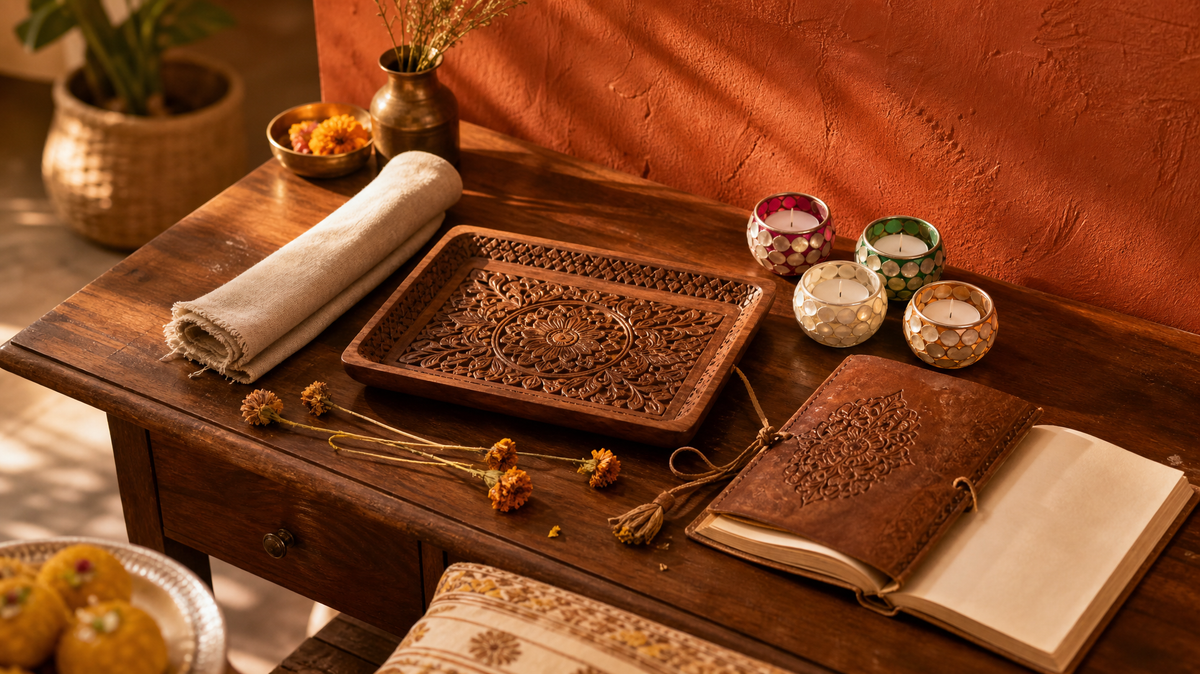
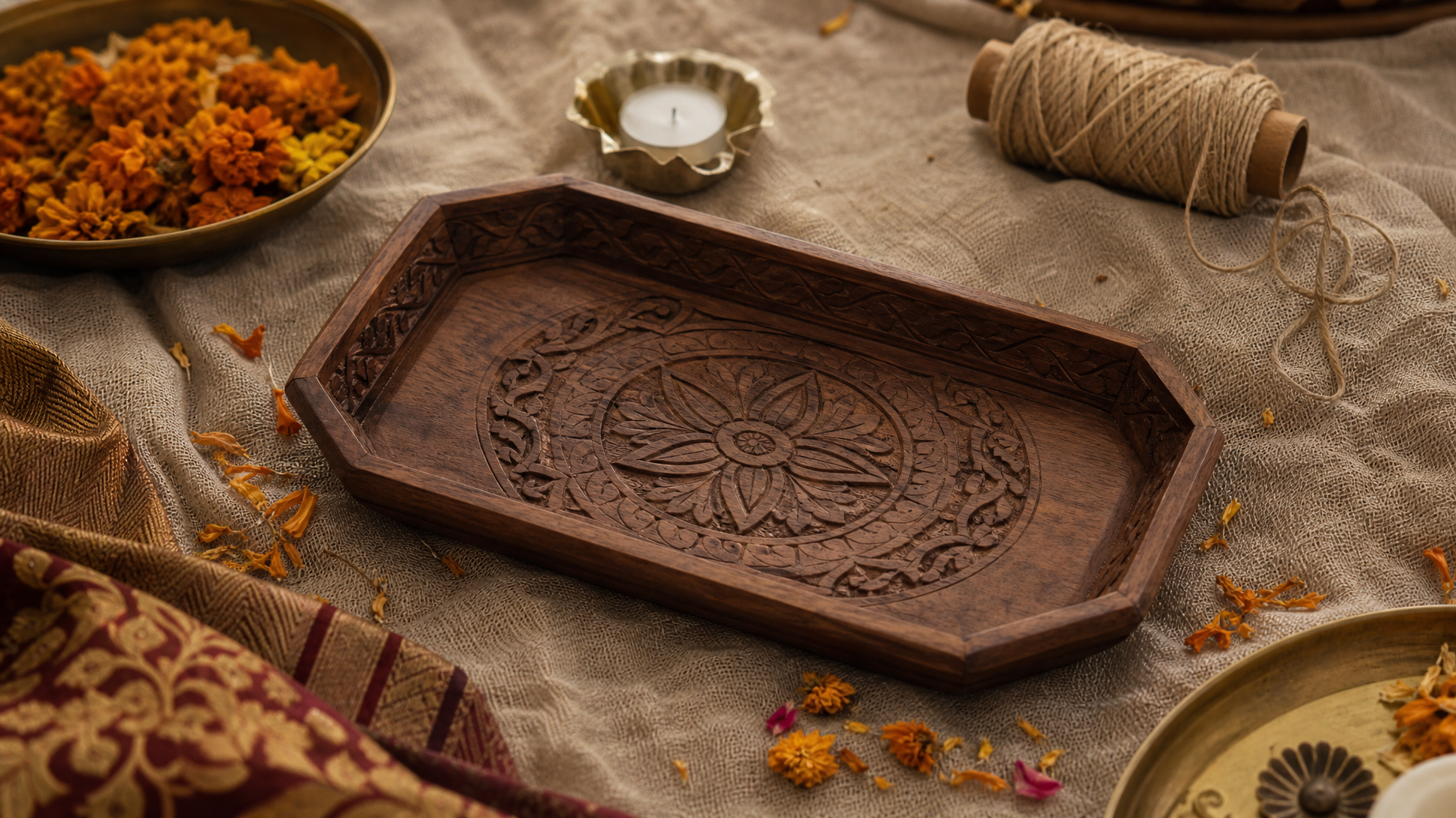
When a craftsperson hand-carves a wooden tray or hand-embroiders a leather journal, they're not running a factory line. They're using exactly as much material as the piece requires. That's a genuinely low-waste production model — not because it's been certified as such, but because of how it inherently works.
Longevity: The Most Underrated Factor
Here's the sustainability angle that almost nobody talks about: how long does the product actually last?
A cheaply made decorative item that falls apart in a season and ends up in the bin is far less sustainable than a well-crafted piece you keep for a decade. Longevity is arguably the single biggest lever in reducing the environmental footprint of anything you bring into your home. A hand-carved wooden serving tray that ages well and gets used for years is, by that measure, a more sustainable choice than a trendy resin piece that chips and gets discarded.
This is where Indian artisan-made décor has a real, structural advantage — not because of marketing language, but because skilled handwork and quality natural materials simply hold up better over time.
How to Spot Greenwashing
A few patterns worth recognizing when you're shopping:
- Vague language with no specifics. "Eco-conscious" and "nature-inspired" mean nothing on their own. What material? Made how? Where?
- Green packaging on an unsustainable product. Recycled tissue paper wrapped around a plastic-heavy item is optics, not substance.
- Certifications that don't apply. Some brands display environmental badges that relate to their packaging or office practices, not their actual products. Read what the certification actually covers.
- "Natural" used loosely. Natural doesn't automatically mean low-impact. The question is always: how was it sourced, processed, and made?
None of this means you need to interrogate every purchase. But it does mean that a brand being upfront about its materials, its makers, and its production process is a far better signal than one that leads with buzzwords.
Why Indian Handcraft Is a Genuine Benchmark
Indian craft traditions weren't designed with sustainability in mind — they predate that conversation entirely. But they embody it almost by default.
Artisans working in wood carving, shell craft, block printing, or hand embossing use skills passed down across generations, local or natural materials, and small-batch production methods. There's no industrial waste stream in a craftsperson's workshop. The tools are simple, the process is slow by design, and the output is a piece that carries real craft value — which means people are less likely to throw it away.
Marigold torans and flower strings made for Diwali or a wedding entrance aren't just decorative — they're part of a living cultural tradition that gives objects meaning beyond their function. Objects with meaning get kept. Objects that get kept don't end up in landfills.
That's sustainability as a cultural practice, not a product category.
What to Actually Ask Before You Buy
If you want to shop more intentionally without turning every purchase into a research project, these three questions do most of the work:
- What is it made from, and is that material named specifically? Wood, shell, brass, cotton — these are real answers. "Natural materials" is not.
- Who made it, and how? Handmade by artisans is meaningfully different from factory-produced. A brand that can tell you something real about its makers is worth more trust than one that can't.
- Will I still want this in five years? Classic craft aesthetics age well. Trend-driven pieces don't. Buying something you'll keep is, quietly, one of the most sustainable decisions you can make.
Brands like StoreIndya are worth paying attention to precisely because their catalog is built around artisan-made pieces — hand-carved wooden trays, shell tea light holders, hand-embossed leather journals — that answer all three of those questions honestly. The craft is the point, not a label applied afterward.
If you're shopping for the home or looking for a gift that won't feel disposable, browse StoreIndya's handcrafted décor collection — made by artisans, built to last, and rooted in a craft tradition that's been low-waste long before that became a reason to buy.
And if you're also thinking about gifting occasions — festivals, weddings, family celebrations — the guide to Bhaiya-Bhabhi gift sets for Raksha Bandhan is worth a read for ideas that are both meaningful and lasting.
Frequently Asked Questions
Is handmade always more sustainable than machine-made?
Generally, yes — handmade production uses less energy, generates less material waste, and typically involves natural materials rather than synthetics. But it's not an absolute rule. What matters most is the combination of material sourcing, production process, and how long the product lasts. A handmade item made from poorly sourced materials still has problems; a well-made machine-produced item from responsibly managed materials can be a reasonable choice too.
How do I know if a brand is genuinely sustainable or just greenwashing?
Look for specificity. A brand that names its materials, describes how its products are made, and tells you something real about its makers is far more credible than one that uses broad language like "eco-conscious" without backing it up. If the sustainability claims are vague and front-and-centre but the product details are thin, that's a warning sign.
Are Indian craft products a good sustainable gifting option?
They're one of the better options available, for a few reasons. They use natural materials, involve handwork rather than industrial production, and carry cultural meaning — which means recipients are more likely to keep and use them rather than discard them. Longevity is a real sustainability factor, and meaningful objects tend to last longer in people's homes.
Do sustainable home décor products cost more?
Often, yes — and for a straightforward reason. Handmade production is slower, skilled labour costs more than factory output, and quality natural materials aren't the cheapest option. But the relevant comparison isn't the upfront price; it's the cost per year of use. A well-made piece you keep for a decade almost always works out cheaper — and less wasteful — than several cheap replacements over the same period.
- artisan decor
- eco-friendly gifting
- greenwashing
- Indian craftsmanship
- Indian handcraft
- sustainable home decor