




How to Hang Indian Pom-Pom Wall Hangings for Diwali (and Keep Them Up All Season Without Them Looking Limp)
Most people hang their Diwali decorations in a hurry — a nail here, a bit of tape there — and then spend the rest of the season quietly bothered by the result. The hangings are too low, or bunched together, or one keeps sliding sideways. The fix isn't buying different decorations. It's understanding a few simple principles of how vertical, hanging décor works on a wall.
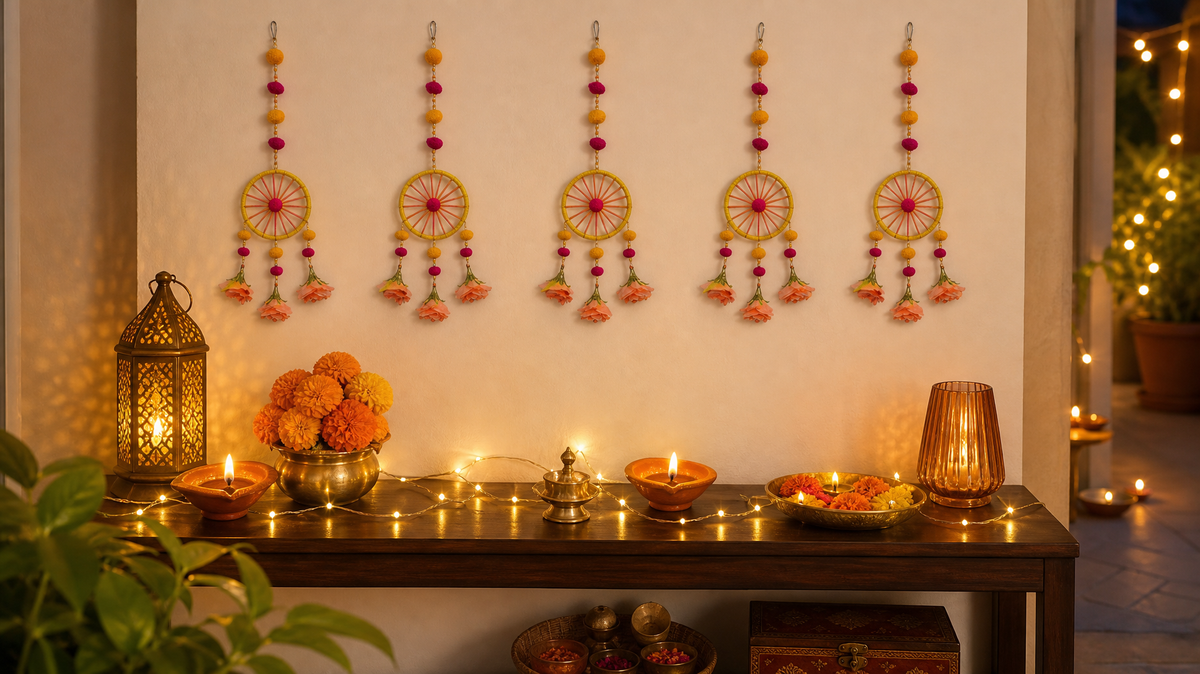
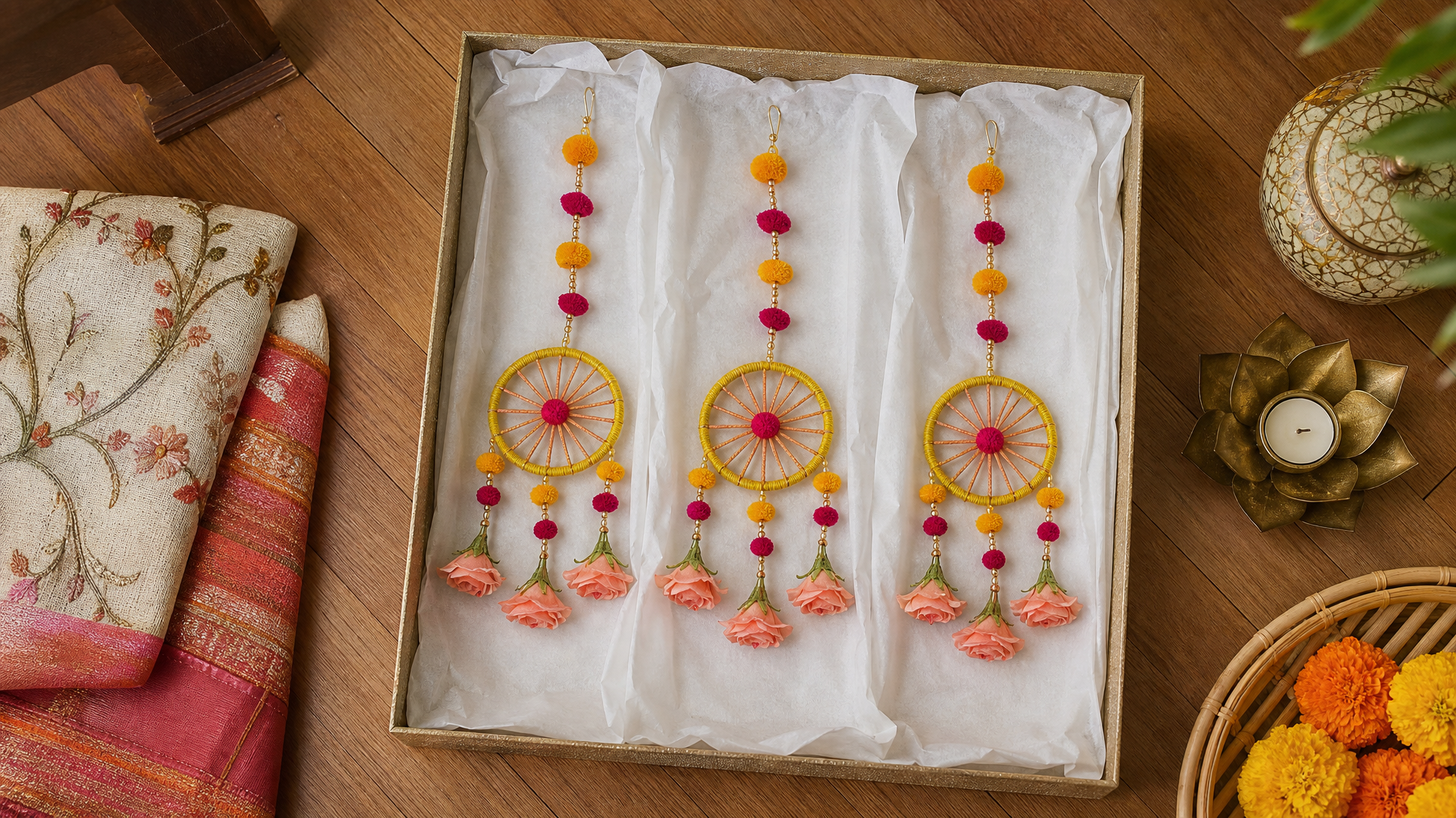
If you've picked up the Store Indya Traditional Wall Hangings Set of 5 — the ones with the cheerful pom-poms in orange, yellow, and magenta, the woven circular chakra hoop in the centre, and the soft peach artificial rose tassels at the bottom — this guide is written specifically for you. But the logic applies to any set of coordinated Indian hanging decorations you're working with.
Start With the Right Wall
Not every wall in your home is a candidate. The hangings need a backdrop that lets them breathe and makes their colour pop — a plain, light-coloured wall is ideal. A white or off-white wall turns the orange, magenta, and yellow pom-poms into an instant focal point. A dark accent wall can work beautifully too, but only if the wall is smooth and uncluttered.
Avoid walls that are already busy: patterned wallpaper, gallery walls, or walls crowded with shelving will compete with the hangings and make the whole thing feel chaotic. The best candidates are typically the wall behind a console table in your entryway, the main wall of your living room, or the wall above your puja room shelf — all places where guests' eyes naturally land first.
How High to Hang Them
This is where most people go wrong. The instinct is to hang decorations at eye level, which places the hook too low and makes the hangings look like they're sinking. Instead, position your hooks so the top of each hanging — the hook itself — sits roughly 20 to 25 cm below the ceiling, or just above the top of a standard door frame if you're working on a wall with one nearby. This lets the full length of the hanging cascade down naturally without the bottom tassels grazing furniture or the floor.
If you're hanging them above a console table or a sideboard, aim for a gap of at least 30 to 40 cm between the bottom tassel and the surface of the furniture below. That breathing room is what makes the arrangement look intentional rather than accidental.
Spacing the Set of Five
A set of five hangings is a generous number — enough to fill a wide wall or create a layered effect across a narrower one. Here's how to approach the spacing depending on your wall width.
On a Wide Wall (roughly 2.5 metres or more)
Distribute all five hangings in a straight horizontal line, evenly spaced. Mark your five hook points first with a light pencil dot or a piece of painter's tape before you commit. Equal spacing — whatever that works out to for your wall — will make the row read as a deliberate installation rather than a random cluster.
On a Narrower Wall
Try a staggered arrangement: hang three at the same height and tuck two slightly lower between them, creating a gentle wave. This works especially well in a hallway or above a puja shelf where the wall is narrower but you still want the full set displayed. The stagger adds visual rhythm without crowding.
As a general rule, leave at least one hanging's width of space between each piece. If they're touching or overlapping, the pom-poms will tangle and the circular hoops will lose their definition.
Which Surfaces Work (and What to Avoid)
These hangings are lightweight, so you don't need heavy-duty hardware. A small nail or a command-style adhesive hook rated for light loads is usually enough for each piece. Smooth plaster, painted drywall, and wood panelling all hold well. Textured or rough stone walls are trickier — adhesive hooks won't bond reliably, so a thin nail is the safer choice there.
Avoid hanging them near ceiling fans or directly in front of an air conditioning vent. The constant airflow will set them spinning and tangling, and after a few days the pom-poms will start to look bedraggled. A calm wall away from direct drafts keeps them hanging straight and full all season.
Making the Arrangement Look Finished
The difference between a decoration and a décor moment is usually what's around it. A few things that work well with this set:
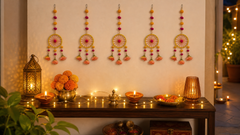
- A console table or shelf below. Candles, a small diya or two, and a flower arrangement underneath anchor the hangings visually and create a layered festive vignette — exactly the kind of setup you see in the product image.
- Warm lighting. String lights draped along the top of the wall or a warm-toned lamp below will catch the peach flower tassels and the woven hoops beautifully. Harsh overhead lighting flattens the colour and texture.
- Odd numbers. If you decide not to use all five at once — say, three for a smaller space — always use an odd number. Three hangings read as a composition; four reads as a mistake.
Storing Them After the Season
Because these hangings are durable and reusable, how you store them matters. Don't coil them tightly or stuff them into a box — the pom-poms will compress and the flower tassels will crease. Instead, hang them loosely over a wide hanger or lay them flat in a shallow storage box with a little tissue paper between each one. Stored this way, they'll come out next Diwali looking exactly as they did on day one.
These aren't single-use decorations. With a little care, they'll be part of your festive setup for years — and that's exactly what makes a handcrafted piece worth having in the first place.
Ready to put this into practice? Shop the Traditional Wall Hangings Set of 5 at Store Indya and have them up on your wall well before the diyas are lit.
Frequently Asked Questions
Can I use these wall hangings outdoors, like on a balcony or porch?
It's best to keep them indoors or in a sheltered, covered space. The artificial flowers and pom-poms can handle normal indoor conditions well, but prolonged exposure to rain, direct sun, or strong wind will fade the colours and weaken the materials faster than you'd want for a reusable decoration.
What's the best way to fix a hook without damaging my wall?
Because the hangings are lightweight, adhesive command-style hooks rated for light loads work well on smooth painted walls and won't leave marks when removed. If your wall is textured or rough, a small thin nail is more reliable. Always check the weight rating on any adhesive hook before using it.
Can these be used for occasions other than Diwali?
Absolutely. The traditional Indian design makes them a natural fit for weddings, Navratri, housewarming ceremonies, puja rooms, and even as everyday home décor if you love the aesthetic. The peach and warm-toned colour palette works year-round, not just during festival season.
Do all five hangings need to be hung at the same height?
Not necessarily. A straight horizontal line at the same height looks clean and formal, which suits a wide living room wall. A staggered arrangement — alternating slightly higher and lower hooks — adds rhythm and works better in narrower spaces like hallways. Both approaches look intentional as long as the spacing between hangings is consistent.
- Diwali Decor
- Festive Decor Ideas
- How To Decorate
- Indian Home Decor
- Wall Hangings