


How to Make Your Home Feel Festive for Every Indian Holiday Using the Same Five Objects
The festival storage problem nobody talks about
Somewhere in most Indian homes, there's a shelf — or a box, or an entire cupboard — dedicated to festival décor that only comes out once a year. Diwali diyas here, Navratri dandiya sticks there, a roll of Holi-coloured bunting wedged in at the back. Every celebration brings a new haul, and every January you're reorganising the chaos again.
The smarter approach isn't buying less — it's buying better. A small set of the right handcrafted objects, chosen for their versatility, can mark every major Indian holiday through rearrangement, recolouring, and re-pairing alone. No new purchase required.
Here are the five objects worth owning, and exactly how to work them across the calendar.
The Five Objects
1. Tea light candle holders (a set of four, assorted colours)
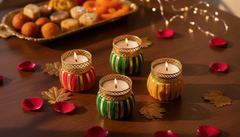
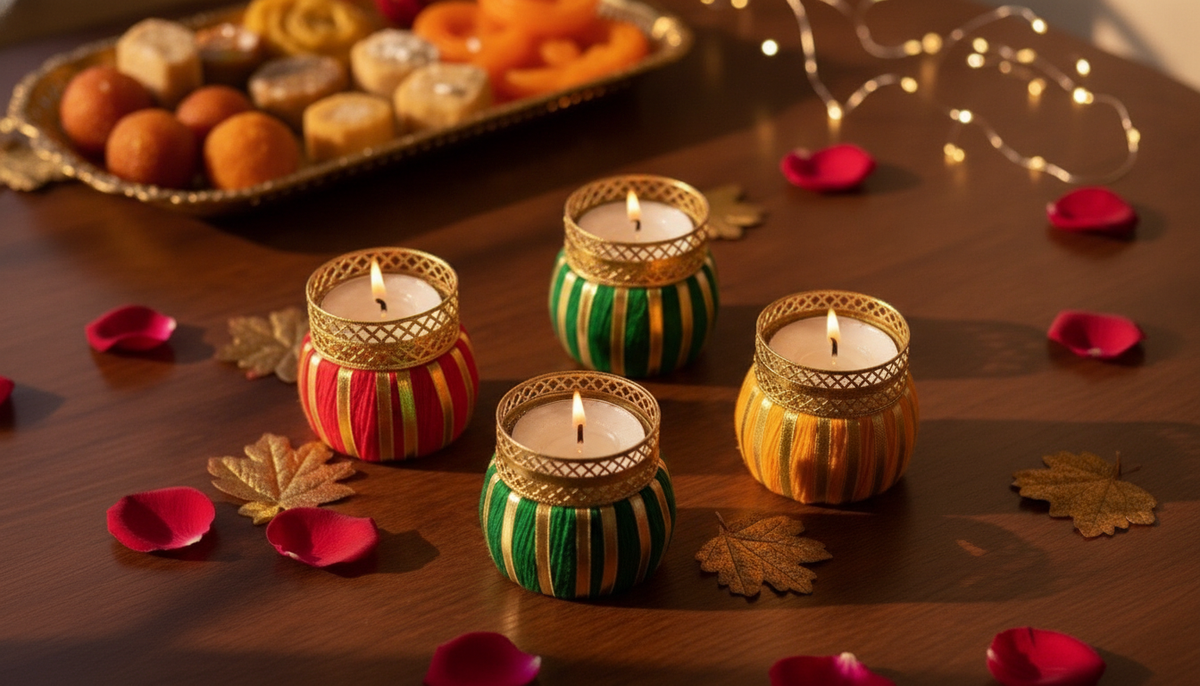
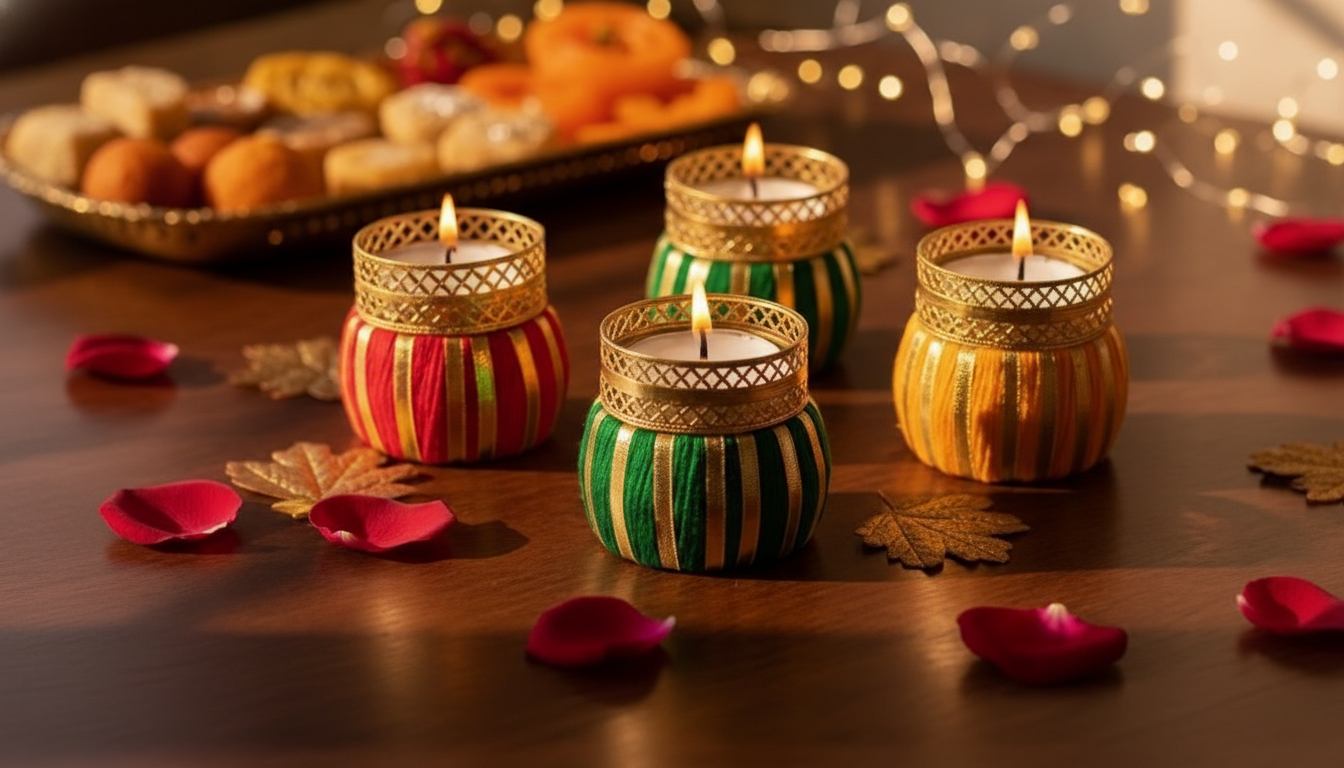
These are the anchor of the whole system. A set of handcrafted tea light holders — like the ones from StoreIndya wrapped in vibrant striped fabric with an ornate gold filigree rim — earns its place because the warm glow of a lit candle is universally festive. It doesn't read as specifically Diwali or specifically Eid. It just reads as celebration.
The trick is in the placement and the pairing. Cluster all four together on a mandir shelf for Diwali and Navratri. Separate them and place one at each corner of a dining table for Eid or Christmas dinner. Set a single holder on a puja thali for everyday ritual. The holders themselves don't change — the context around them does all the work.
The assorted colours matter here too. Red, green, and yellow in the same set means you're never fighting the palette of the festival you're decorating for.
2. A marigold garland or flower string
Marigolds are the most cross-cultural flower in the Indian festive calendar. They appear at Diwali, at weddings, at Ganesh Chaturthi, at housewarmings, and at Navratri. A good artificial garland — one that holds its colour and drapes naturally — is the closest thing to a universal festive prop that exists.
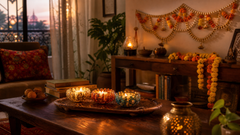
Drape it across a doorframe for Diwali. Coil it around a centrepiece bowl for a dinner party. Loop it along a mandir shelf for puja. On Holi, pair it with bright cushion covers and it disappears into the riot of colour without looking out of place. Five metres of marigold garland does more decorating work than almost anything else you could own.
3. A decorative toran or door hanging
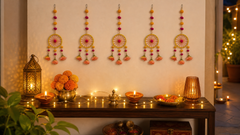
The entrance to your home sets the tone before anyone steps inside. A toran — a traditional door hanging — signals that something is being celebrated. The key is choosing one that isn't too festival-specific in its motifs. Geometric patterns, pearl detailing, or simple marigold clusters work for Diwali, Navratri, Eid, and even Christmas without any awkwardness.
Swap it between the front door and the pooja room entrance depending on the occasion. That single move changes the energy of both spaces.
4. A carved wooden tray or decorative box
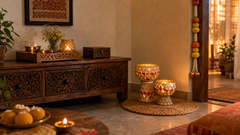
Every festival involves an offering — sweets for Diwali, dates for Eid, modak for Ganesh Chaturthi, dry fruits for Christmas. A carved wooden tray gives those offerings a home that looks intentional rather than improvised. It also doubles as a surface for your tea light holders, a base for a floral arrangement, or a gift tray when you're visiting someone else's celebration.
Utility and beauty in one object. That's the standard every piece in this kit should meet.
5. Loose flower petals or a small bowl of colour
This one costs almost nothing and changes everything. Rose petals scattered around your tea light holders, a small bowl of gulal near a Holi arrangement, or marigold heads floated in a shallow dish — these are the finishing details that make a decorated space feel alive rather than assembled. They're also the easiest element to swap when the festival changes, which is exactly the point.
How the same five objects shift across the year
Diwali: All four tea light holders clustered together, garland draped across the mandir, toran on the front door, wooden tray holding a mithai arrangement, rose petals scattered across the table. Maximum warmth, maximum glow.
Navratri: Tea light holders in red and yellow forward (the green one steps back), garland looped around a small Mata ki chowki, toran moved to the pooja room, wooden tray holding a coconut and sindoor. The same objects, a different focal point.
Eid: Separate the four holders and place them at the corners of the dining table. The garland becomes a centrepiece wreath. The wooden tray holds dates and dry fruits. Petals optional — fresh flowers if you have them. The gold filigree on the holders catches the light beautifully against a white tablecloth.
Christmas: The green holder moves to the front. The garland gets paired with a string of fairy lights. The wooden tray holds a candle and some pine cones or star anise. Nothing about this reads as specifically Indian, which is the point — the craftsmanship travels.
Holi: This is the one festival where the kit steps back and lets colour lead. Use the wooden tray as a base for bowls of gulal. The tea light holders can anchor the arrangement, but the real décor here is the colour itself. Your five objects become the frame, not the painting.
The one rule that makes this work
Every object in your festive kit needs to be beautiful enough to live on display year-round. If something only looks right during its own festival, it's taking up storage space for eleven months. The handcrafted tea light holders, the marigold garland, the toran — these should all be things you'd happily leave out on a regular Tuesday. That's the test.
When you shop with that standard in mind, you stop accumulating and start curating. Your home feels festive whenever a celebration arrives, not because you went shopping, but because you already had the right things.
If you're building this kit from scratch, the tea light holders are the place to start — they're the one object that works in every room, for every occasion, across every season. Explore the full range of handcrafted festive décor at StoreIndya — wall hangings, marigold garlands, diyas, and more, all made to last well beyond a single celebration.
Frequently Asked Questions
Can artificial marigold garlands really be reused across multiple festivals without looking worn?
A good-quality artificial garland holds its colour and shape through repeated use, which is exactly why it's worth investing in one made with care rather than picking up a cheap disposable version. Store it loosely coiled (not crumpled into a box) and it should stay display-ready for years.
Are tea light holders safe to use with real candles indoors?
The handcrafted holders from StoreIndya are designed to work with standard tea light candles. As with any open flame indoors, keep them away from draughts, curtains, and flammable materials, and never leave them unattended. If you have young children or pets around, LED tea lights give you the same warm glow with none of the risk.
How do I store handcrafted décor so it doesn't get damaged between festivals?
Wrap fabric-covered pieces like the tea light holders individually in tissue paper or soft cloth before storing — this protects the thread wrapping and the gold detailing from snagging. Keep garlands loosely looped rather than tightly bundled, and store wooden pieces away from direct moisture. A single lidded box dedicated to your festive kit makes the whole system easier to manage.
Are these handcrafted décor items suitable as gifts for people who don't celebrate Indian festivals?
Absolutely. The appeal of well-made handcrafted objects — warm candlelight, natural materials, intricate detailing — crosses cultural lines easily. A set of tea light holders or a carved wooden tray works as a housewarming gift, a dinner party thank-you, or a birthday present for anyone who appreciates beautiful things for the home. The Indian craftsmanship is part of the story, not a barrier to it.
- Diwali
- Festival Guide
- Handcrafted
- Home Decor
- Indian Festive Decor
- Tea Light Holders