


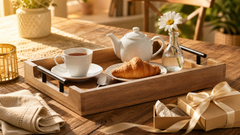
How to Decorate a Modern Indian Living Room: A Room-by-Room Guide to Getting the Balance Right
The problem with 'modern Indian' décor
You've got a beautiful, freshly done living room — smooth walls, a clean sofa, maybe a terrazzo coffee table. And then you try to bring in some Indian character, and suddenly the room tips. Too many brass pieces and it feels like a temple antechamber. A large traditional painting and it fights with the minimalist furniture. One toran on the door and guests ask if there's a puja happening.
The issue isn't that Indian craft doesn't belong in a modern home. It absolutely does. The issue is proportion and placement — knowing which objects carry cultural warmth without demanding the whole room reorganise itself around them.
This guide works through two spaces where that balance matters most: the living room and the entryway. Get these two right and the rest of the home tends to follow naturally.
The Living Room: Warmth Without Weight
Start with one anchor object, not a collection
The most common mistake is treating Indian décor like a theme to install rather than a layer to add. Buying five handcrafted pieces at once and grouping them together doesn't read as curated — it reads as a dedicated corner, which is very different from a home that feels cohesively warm throughout.
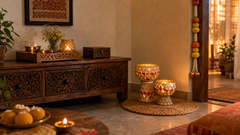
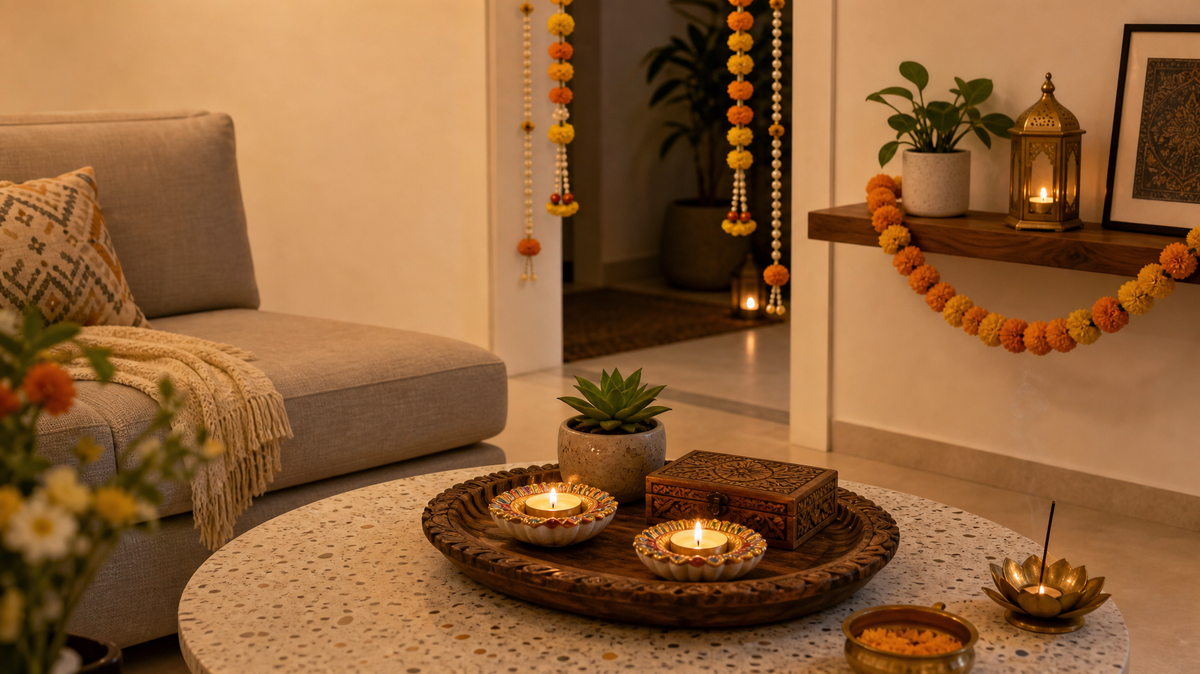
Pick one anchor object for the living room. Something with visual weight and craft character that earns its place on its own. A hand-carved wooden tray on the coffee table is a strong choice — it's functional, it has texture, and it quietly signals artisanship without announcing it. Use it to hold a candle, a small plant, or a stack of books. It works harder than any purely decorative piece because it belongs on that surface every single day.
Let candlelight do the heavy lifting
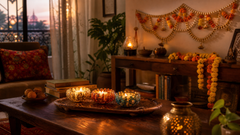
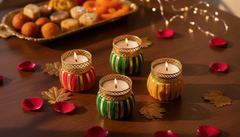
If there's one category where Indian craft translates effortlessly into a modern interior, it's tea light holders. A set of shell tea light holders in a living room with neutral walls creates exactly the kind of warm, ambient glow that contemporary interiors often lack — without adding visual clutter in daylight hours.
The trick is placement: group them at different heights rather than in a straight line. One on the coffee table, one on a side shelf, one near the window ledge. When lit, the room feels intentional. When unlit, they're just quietly beautiful objects.

Textiles over wall art (at least at first)
A large traditional painting on a modern wall can work, but it's a high-commitment call. Textiles — a block-printed cushion cover, an embroidered throw draped over the arm of a sofa — are far more forgiving. They add colour and craft in a way that's easy to adjust seasonally or as your taste evolves. They also soften the hard lines of contemporary furniture in a way that wall art can't.
If you do want something on the wall, go smaller and more graphic than you think you need. One well-chosen piece is more powerful than a gallery wall of traditional motifs.
The shelf edit
Open shelving is where modern Indian décor either shines or collapses. The rule here is simple: one handcrafted object per shelf cluster, surrounded by breathing room. A decorative wooden box next to a couple of books and a small plant reads as considered. Four handcrafted objects lined up reads as a market stall.
Handcrafted boxes — carved, lacquered, or embossed — are particularly useful on shelves because they're both decorative and practical. You can store things in them, which means they earn their space twice over.
The Entryway: The First Impression That Sets the Tone
The toran question
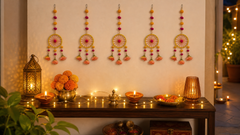
A toran — the traditional door hanging made from marigolds, beads, or fabric — is one of the most recognisable markers of an Indian home. In a modern entryway, it works beautifully as long as you treat it as the only decorative element on the door or immediate door frame. Don't pair it with a wreath, a nameplate, and a wall hanging all at once. Let it stand alone.
An artificial marigold and pearl toran, for instance, holds its colour and shape through every season without wilting — which matters when you want a front door that looks good on a Tuesday afternoon, not just on a festival day. The key is choosing one that's proportionate to your door: a slim, elegant toran suits a modern door far better than a wide, heavily layered one.
What goes on the entryway table
If you have a console table or even a small shelf near the entrance, this is prime territory for a single handcrafted moment. A carved wooden tray holding keys and a small candle holder is all you need. It's functional, it's welcoming, and it signals warmth the moment someone walks in.
Resist the urge to add more. Entryways are small, and they get cluttered fast. One beautiful, well-placed object is more impactful than three competing for attention.
Flower strings: use them with restraint
Artificial marigold garland strings are one of the most versatile and underused tools in Indian home décor. In a modern home, they work best when used architecturally — draped along a mantle, framing a doorway, or wound around a stair banister during the festive season — rather than hung loosely or bunched together.
Outside of festivals, a single short strand on a shelf or a hook near the entrance adds colour and cultural warmth without committing the space to a full festive look. Think of them the way you'd think of fresh flowers: a seasonal, mood-setting accent rather than a permanent fixture.
The Principle That Ties It All Together
Modern Indian décor works when craft objects are treated as individuals, not as a genre. Each piece — a toran, a tea light holder, a carved tray — has its own presence. Give it room to breathe and it adds warmth. Crowd it with similar pieces and the room loses its modernity without gaining any real depth.
The best modern Indian living rooms don't look decorated. They look lived in by someone who knows what they love. That's a harder thing to achieve than it sounds, but it starts with buying fewer, better things and placing them with intention.
If you're shopping for a new home or refreshing a space that needs exactly this kind of warmth, StoreIndya's collection of handcrafted home décor — carved wooden trays, shell tea light holders, marigold torans, and flower garland strings — is a good place to start. And if you're also thinking about gifting for someone who's just moved in or is celebrating a festival, the guide to Bhaiya-Bhabhi gift sets has some practical ideas worth reading alongside this one.
Shop StoreIndya's carved wooden trays, tea light holders, and marigold torans — pieces that add genuine Indian craft character to a modern room without tipping the balance.
Frequently Asked Questions
How do I add Indian décor to a modern home without it looking mismatched?
The key is restraint and intentional placement. Treat each handcrafted piece as an individual object rather than part of a themed set. One carved wooden tray on a coffee table or a single toran on the front door reads as curated; grouping multiple traditional pieces together in one spot tends to overwhelm a modern interior. Start with one or two anchor pieces and build slowly from there.
Can I use marigold garlands as everyday décor or only for festivals?
Artificial marigold garland strings work well year-round when used architecturally — along a mantle, framing a doorway, or on a shelf. The festive association comes more from how many you use and how they're grouped than from the garland itself. A single strand used sparingly reads as a warm, colourful accent rather than a festival decoration.
What's the best way to style a toran on a modern front door?
Let the toran be the only decorative element on or immediately around the door — don't pair it with a wreath or wall hanging. Choose a toran that's proportionate to your door size; a slimmer, more refined style tends to suit contemporary doors better than a wide, heavily layered one. Artificial torans hold their shape and colour without seasonal maintenance, which makes them practical for everyday display, not just festival days.
What kind of Indian décor works best in a small entryway?
Small entryways benefit from one well-placed object rather than several competing ones. A carved wooden tray on a console table — holding keys, a small candle holder, or a plant — is functional and visually warm without adding clutter. If you have wall space, a toran on the door handles the vertical plane. Keep the floor and remaining surfaces clear so the space feels welcoming rather than crowded.
- festive décor
- handcrafted décor
- home styling guide
- Indian home décor
- living room styling
- modern Indian interiors